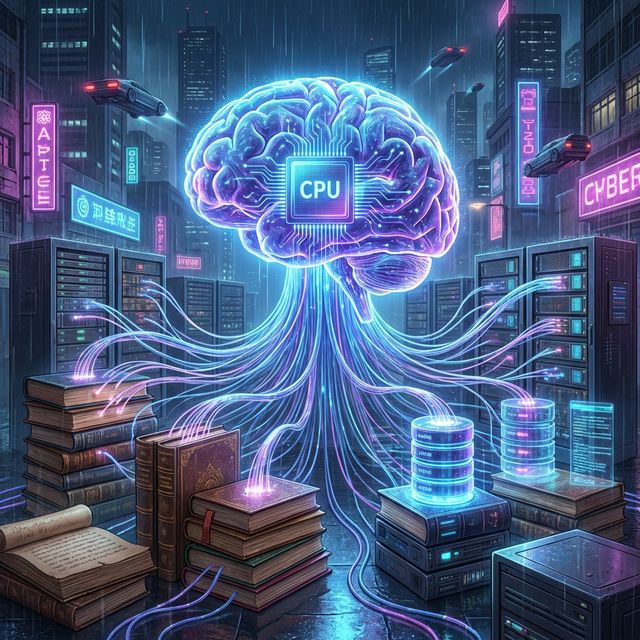
Training Data vs. Real-Time Knowledge
Large Language Models like GPT-4 and Claude have knowledge cutoffs, they were trained on data up to a certain date and don't inherently know what happened yesterday. Retrieval-Augmented Generation (RAG) bridges this gap. Understanding RAG is essential for modern visibility because it explains how AI finds and uses your current content.
How RAG Works
When you ask an AI a question, RAG-enabled systems don't just rely on training data. They search external knowledge bases, websites, documents, databases, in real-time, retrieve relevant information, and incorporate it into their response. This means your freshly published content can influence AI answers immediately, without waiting for the next model retraining.
The Implications for Content Strategy
RAG changes the content game in two ways. First, recency matters more. Breaking news, updated research, and timely analysis can influence AI responses in ways that static "evergreen" content can't. Second, structure matters more. RAG systems need to parse and understand your content quickly, clear headings, semantic HTML, and logical organization improve your chances of being retrieved.
Optimizing for RAG Retrieval
RAG systems use semantic search, not keyword matching. They look for content that meaningfully relates to the query, not just content that contains the query words. This rewards comprehensive, context-rich content that genuinely addresses topics. Thin content that targets specific keywords without adding meaningful insight gets ignored by RAG systems.
Building RAG-Friendly Content
To succeed in a RAG-driven ecosystem, your content needs to be discoverable, parseable, and semantically rich. Technical accessibility matters: proper HTML structure, fast load times, and clean markup.
Make Your Content RAG-Ready
Use our content scoring tool to analyze your content's structure and semantic density, ensuring it's optimized for the RAG systems that power modern AI recommendations. Find out if your content can be retrieved when it matters.